
In-Office Whitening Treatment: Quick Ways to Brighten Your Smile
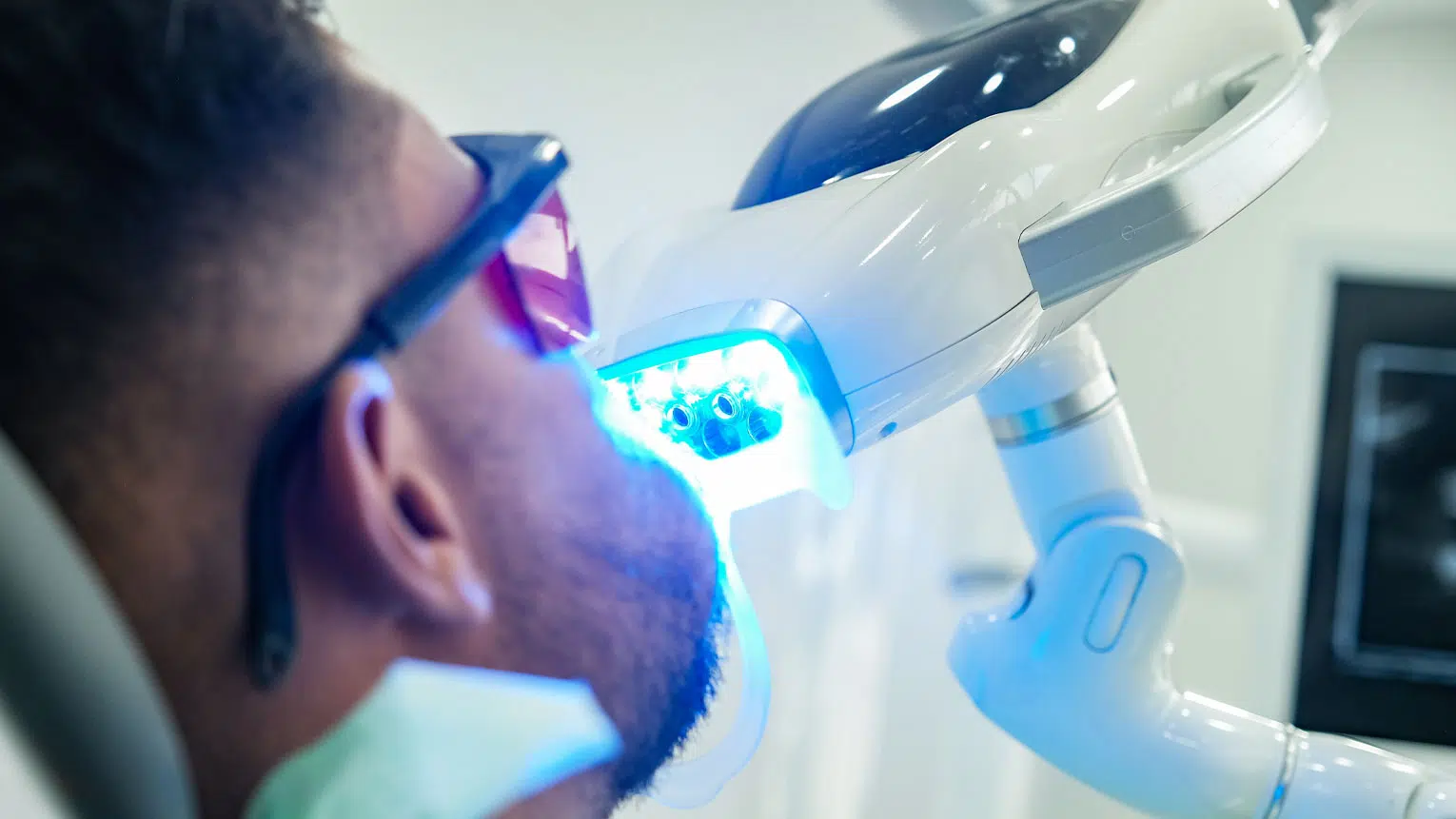


Your teeth can look years younger with professional whitening. At Valley Dental Care, we’ve seen patients transform their smiles in a single appointment using in-office whitening treatment that delivers results at-home kits simply can’t match.
The difference comes down to strength and expertise. Professional-grade whitening agents work faster and safer than over-the-counter options, and our dentists protect your teeth throughout the entire process.
Why Professional Whitening Beats Store-Bought Kits
Professional-grade whitening gels contain hydrogen peroxide concentrations of 25–35%, while over-the-counter strips typically max out at 3–6%. This massive difference in strength means professional treatment works faster and penetrates deeper into tooth enamel. Professional whitening delivers visible results in 60–90 minutes, compared to weeks of daily use with store-bought products. The American Dental Association recognizes professional whitening as significantly more effective, and studies show in-office treatments can lighten teeth in a single session. Store-bought kits require consistency and patience, often fading within weeks because the lower concentrations simply cannot produce lasting change. Your dentist also customizes gel strength based on your specific tooth shade and sensitivity level, something no generic kit can do.
How Professional Supervision Protects Your Teeth
Your gums and enamel face real risks with improper whitening. Over-the-counter trays fit poorly, allowing bleach to seep onto gum tissue and cause irritation or sensitivity that persists for days. Professional dentists apply a protective barrier that shields your soft tissue completely while the whitening agent works only on teeth. Dentists also apply desensitizing agents before and after treatment to minimize discomfort and monitor your response throughout the entire process. If you have existing decay or gum disease, your dentist identifies these issues during the pre-treatment exam and addresses them first. This preventive approach prevents painful complications and produces results that actually last. At-home users often experience tooth sensitivity and gum irritation from overuse or improper application, forcing them to stop treatment entirely and waste money on ineffective products.
Why Results Last Longer After Professional Treatment
Professional whitening typically maintains brightness for 6–12 months with proper maintenance, while store-bought results fade in 2–4 weeks. Your dentist provides take-home custom trays or whitening pens (designed specifically for your teeth) that extend results far beyond what a single office visit accomplishes. These professional-grade maintenance kits use stronger formulas than anything sold in stores and fit your teeth perfectly, eliminating uneven whitening on crooked or irregular teeth. You receive a personalized maintenance plan that includes which foods and beverages to avoid, post-treatment care instructions, and touch-up schedules tailored to your lifestyle. This structured approach costs less in the long run because you avoid repeatedly purchasing cheap kits that don’t work.
What Happens During Your Appointment
The whitening process itself takes about an hour from start to finish. Your dentist first examines your teeth and takes shade photos to establish a baseline for comparison. The dentist then applies the protective barrier to your gums and applies the professional-grade bleaching gel to your teeth for 15–30 minutes per cycle. Additional cycles can be applied during the same visit to achieve your desired shade. Results appear immediately after treatment, with your final shade often becoming visible in the following days as your teeth continue to lighten slightly.
Moving Forward With Your Brighter Smile
Professional whitening transforms your smile in a single appointment, but maintaining those results requires the right approach. Understanding what stains your teeth and how to protect your investment makes the difference between a smile that stays bright and one that fades within weeks.
What Happens During Your In-Office Whitening Visit
Your Pre-Treatment Examination
Your appointment starts with a thorough examination before any whitening agent touches your teeth. Your dentist takes pre-treatment shade photos using a standardized color guide, establishing a baseline so you can see exactly how many shades lighter your teeth become. This documentation proves results in a way your eyes alone cannot capture. The dentist checks for cavities, cracks, or worn enamel that might cause sensitivity during treatment and addresses these issues first. If you have existing restorations like crowns or composite fillings, your dentist explains that these won’t whiten and discusses whether alternative cosmetic options make sense for your smile. This consultation typically takes 10–15 minutes and directly impacts your results and comfort level during the procedure itself.
Protecting Your Gums and Enamel
The actual whitening process takes 30–60 minutes depending on your desired shade and starting tooth color. Your dentist applies a protective barrier to your gums using either a gum dam or liquid dam resin, preventing the bleaching gel from contacting soft tissue where it causes irritation. The professional-grade bleaching gel, containing 25–35% hydrogen peroxide, gets applied to the visible tooth surface for 15–30 minutes per cycle. Some treatments use an activating light to accelerate the bleaching process, though the gel strength matters far more than the light itself.
The Whitening Cycles and Results
Your dentist may apply additional cycles during the same visit if you want to reach a lighter shade, with most patients seeing dramatic results within the first cycle. After the final cycle, the gel is thoroughly rinsed away and your dentist applies a fluoride treatment and desensitizing agent to protect your enamel and reduce post-treatment sensitivity. You leave with immediate results, though your teeth may continue lightening slightly over the next 24–48 hours as the bleaching process completes.
Your Take-Home Instructions and Maintenance Plan
Before you leave, your dentist provides take-home instructions covering which foods and beverages to avoid for the next 48 hours, how to use any prescribed whitening pen or custom tray for maintenance, and when to schedule your next touch-up appointment. Most patients maintain their results for 6–12 months with proper care and occasional touch-ups. The specific foods and habits that threaten your newly brightened smile require attention if you want to protect your investment beyond that first week.
Protecting Your Results After Whitening
Your whitening results fade faster than you might expect without intentional protection, and the culprits are far more specific than generic advice suggests. Professional whitening typically lasts 1–3 years, but this timeline collapses dramatically if you ignore what touches your teeth during that window. The first 48 hours after treatment are critical because your tooth enamel remains slightly porous and more vulnerable to staining agents.
Staining Foods and Beverages That Threaten Your Smile
Coffee, red wine, and dark sodas are obvious offenders, but tomato sauce, soy sauce, balsamic vinegar, and berries penetrate enamel just as effectively. If you consume these regularly, expect visible fading within 4–6 weeks rather than months. Smoking and tobacco products accelerate staining even more aggressively than food and beverages, essentially undoing your investment within weeks if you continue the habit.
The practical solution isn’t elimination-it’s timing and rinsing. Drink your coffee or wine quickly rather than sipping over an hour, then rinse your mouth with plain water immediately afterward to wash away color-causing agents before they set. Using a straw for dark beverages significantly reduces contact between liquid and teeth. Eat crunchy fruits and vegetables like apples, carrots, and celery with meals because they naturally stimulate saliva production and help clean tooth surfaces. Chew sugarless gum containing xylitol after meals to serve the same purpose and keep your smile brighter between appointments.
When to Schedule Touch-Ups
Most patients see noticeable fading by month 8–10 and benefit from a touch-up appointment before brightness drops below acceptable levels. Waiting until your teeth look noticeably dull wastes your previous investment because catching fading earlier requires less aggressive treatment to restore brightness. Schedule touch-ups every 6–12 months depending on your diet and habits-if you drink multiple cups of coffee daily or consume wine regularly, plan on the shorter timeline.
Your dentist may provide professional-grade take-home whitening pens or custom trays as part of your maintenance plan, which cost significantly less than full in-office treatments and deliver meaningful results when applied consistently. Use these maintenance products once monthly or quarterly to keep your shade stable without the expense and time commitment of repeated office visits. Some patients achieve excellent results with whitening toothpaste between professional treatments, though only products carrying the American Dental Association Seal of Acceptance actually deliver measurable benefits. Standard whitening strips from drugstores rarely maintain professional results effectively because their lower gel concentrations simply cannot fight months of dietary staining.
Daily Habits That Preserve Brightness
Maintain consistent oral hygiene directly to impact how long your whitening lasts because clean teeth resist staining far better than teeth with plaque buildup. Brush twice daily with fluoride toothpaste, floss daily, and use mouthwash to eliminate bacteria and particles that trap staining compounds. Stay hydrated with plain water throughout the day because it rinses away particles and promotes saliva production, your mouth’s natural defense against staining and decay.
Your dentist provides specific post-treatment instructions tailored to your lifestyle, and following these recommendations determines whether your results last 6 months or 12 months. If sensitivity develops after treatment, apply desensitizing toothpaste for two weeks before your touch-up appointment to reduce discomfort significantly. The investment in professional whitening pays dividends only when you protect it through deliberate choices about what you consume and how you care for your teeth afterward.
Protecting Your Brighter Smile
Professional in-office whitening treatment transforms your smile in a single appointment, delivering results that at-home kits cannot replicate. You walk out with teeth that are 6–8 shades lighter, and this brightness continues improving over the next 24–48 hours as the whitening process completes. This immediate change boosts your confidence and gives you a smile that reflects your investment in your appearance.
The real advantage extends far beyond that first week. Professional whitening lasts 6–12 months with proper maintenance, while store-bought products fade within weeks, making professional treatment the smarter financial choice when you factor in the cost of repeatedly purchasing ineffective kits. We at Valley Dental Care customize whitening treatment to your specific tooth shade and sensitivity level, protecting your gums and enamel throughout the entire process while providing take-home maintenance kits that keep your results bright for months.
Your investment in professional whitening pays dividends every time you smile, and the brightness and confidence you gain far outweigh the cost of a single appointment. Schedule your whitening appointment at Valley Dental Care today and experience how a brighter smile changes the way you feel about yourself.
Meet the Author

Dr. Samantha Kothapalli
Dr. Sam provides personalized dental care with a focus on prevention, patient education, and modern, comfortable treatment.
Meet Dr. SamRelated Posts
In-Office Whitening Treatment: Quick Ways to Brighten Your Smile
Compare professional whitening for teeth to drugstore options and learn why dentist treatments deliver superior, longer-lasting results.
In-Office Whitening Treatment: Quick Ways to Brighten Your Smile
Explore professional teeth whitening for a brighter smile. Learn about benefits, costs, and results. Discover safe, effective methods today.

In-Office Whitening Treatment: Quick Ways to Brighten Your Smile
Explore safe whitening options for sensitive teeth and learn which treatments work best without causing pain or discomfort.
